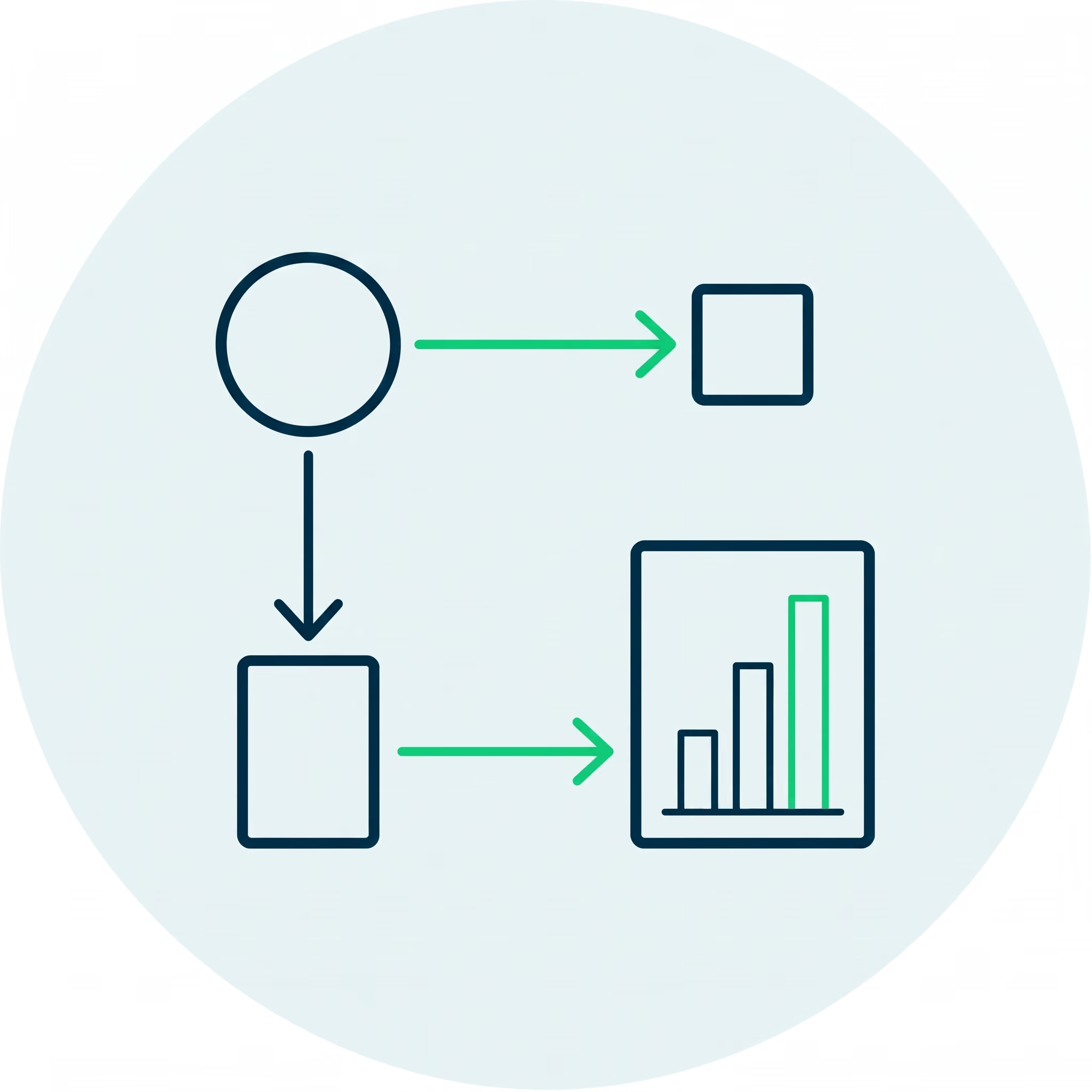
Define the Opportunity
Start with the asset, indication, geography, patient population, and forecasting objective. PharmaCast-AI orients the workflow around the therapeutic context, whether you are evaluating a rare disease, oncology asset, specialty therapy, or high-volume primary care market.

Build a Sourced Assumption Base
AI-assisted research agents organize starting assumptions across epidemiology, diagnosis, treatment flow, pricing, access, uptake, competitive events, and other market drivers. Proposed assumptions are structured into a clear grid with source context so your team can review the basis for each input.

Review, Adjust, and Approve
You maintain control over the forecast. Users can edit assumptions, set ranges, add internal knowledge, document rationale, and approve the inputs that should flow into the model. PharmaCast-AI provides the starting point; your team provides the clinical and commercial judgment.

Generate Pharma-Specific Model Logic
Once assumptions are approved, PharmaCast-AI applies structured patient-flow logic tailored to the market and indication. The platform reduces manual formula wiring and helps avoid the broken links, hidden dependencies, and version-control issues common in spreadsheet-based models.
Test Scenarios and Sensitivities
Evaluate the impact of changes in launch timing, competitor entry, line-of-therapy positioning, diagnosis rates, pricing, access, penetration, and other commercial levers. Compare base, upside, downside, and event-driven scenarios without rebuilding the model from scratch.

Export Decision-Ready Outputs
Generate clear outputs for leadership reviews, diligence discussions, planning cycles, or investor-facing analysis. Export model outputs, assumption summaries, charts, and PPT/CSV/PDF files that can be incorporated into your existing reporting process.

From indication to decision-ready forecast
Traditional forecasting often starts with blank spreadsheets, manual research, and fragile formulas. PharmaCast-AI replaces that with a structured workflow that accelerates the build while keeping your team in charge of the strategy.
Define the opportunity
Start with the asset, indication, geography, patient population, and forecasting objective. PharmaCast-AI orients the workflow around the therapeutic context, whether you are evaluating a rare disease, oncology asset, specialty therapy, or high-volume primary care market.

Build a sourced assumption base
AI-assisted research agents organize starting assumptions across epidemiology, diagnosis, treatment flow, pricing, access, uptake, competitive events, and other market drivers. Proposed assumptions are structured into a clear grid with source context so your team can review the basis for each input.
Review, adjust, and approve
You maintain control over the forecast. Users can edit assumptions, set ranges, add internal knowledge, document rationale, and approve the inputs that should flow into the model. PharmaCast-AI provides the starting point; your team provides the clinical and commercial judgment.
Generate pharma-specific model logic
Once assumptions are approved, PharmaCast-AI applies structured patient-flow logic tailored to the market and indication. The platform reduces manual formula wiring and helps avoid the broken links, hidden dependencies, and version-control issues common in spreadsheet-based models.
Test scenarios and sensitivities
Evaluate the impact of changes in launch timing, competitor entry, line-of-therapy positioning, diagnosis rates, pricing, access, penetration, and other commercial levers. Compare base, upside, downside, and event-driven scenarios without rebuilding the model from scratch.
Export decision-ready outputs
Generate clear outputs for leadership reviews, diligence discussions, planning cycles, or investor-facing analysis. Export model outputs, assumption summaries, charts, and PPT/CSV/PDF files that can be incorporated into your existing reporting process.


.jpg)